M SQUARED #3
Written By: Teagan Strachen
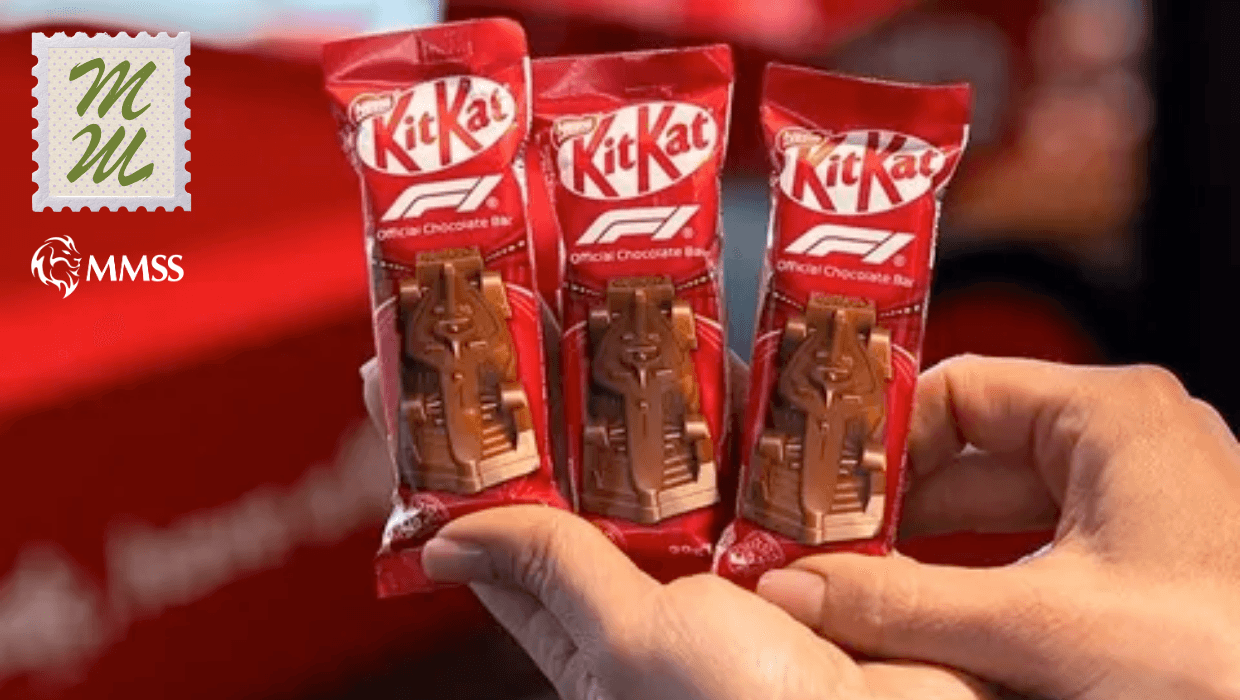
Just a few weeks ago we all opened our social media feeds to be welcomed by an abundance of KitKat related content. No matter where you were scrolling, every second post was somewhat related to the well-known confectionery brand. It didn’t take long to discover why. Thieves had allegedly stolen a truck load of chocolate and just… vanished.
Let’s be honest though, a couple of seconds of contemplation (and one quick look at the date) told us it was probably just another April Fool’s joke. However, to the surprise of many, there was absolutely no fooling around.
Someone was a little too desperate to ‘have a break’
News broke that KitKat had officially been robbed of nearly half a million chocolate bars during routine transportation from a Nestle factory in Italy en-route to Poland just days before Easter.
The twelve tons worth of Formula One themed bars were stolen from a fleet of trucks that formed a part of a larger shipment around Europe. Who and why the limited-edition range was targeted is yet to be fully understood but we do know the ramifications that this could have had on KitKat had they not responded the way they did.
Any lack of appropriate damage control could have had KitKat looking complacent and mismanaged... I mean a multi-billion-dollar brand just lets people steal twelve tons worth of profitable products.
However, what would usually be a ‘worst-case-scenario’ for any company, turned into a dream campaign for the confectionery brand. KitKat used the heist as an opportunity for strategic marketing and PR to detract negative attention from news headlines, using social media as a tool to trigger a global online frenzy.
The PR plot twist
KitKat used the potential PR disaster to propel a memorable marketing campaign, refusing to let the infamous event dampen their brand image. Taking to ‘X’, KitKat posted a response to the issue, putting a positive and playful spin on the heist.
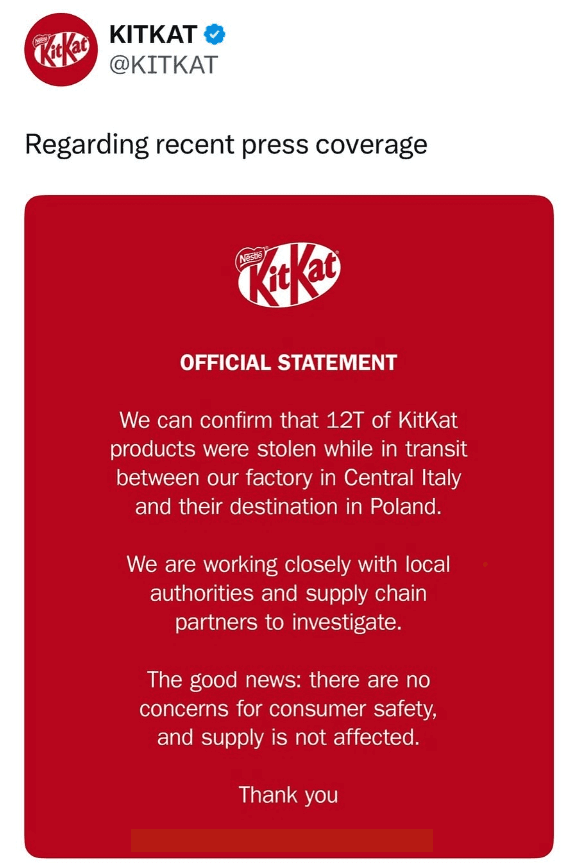
With news spreading like wildfire, capturing the attention of millions around the world the statement posed not only as a witty and professional response to a serious issue, but a spotlight and reassurance on their strong logistical management and efficient production lines, assuring that supply would remain unaffected around the world – quite ironic considering the circumstances.
Not just a win for KitKat
If our feeds were anything alike, you would have seen numerous “statements” from companies expressing humorous condolences and digs at the KitKat travesty, or maybe you’ve come across the endless memes on Instagram from users rushing to get in on the action. Either way at least one post has caught each and every one of our attention.
The one name that’s now in everyone’s minds… KitKat.
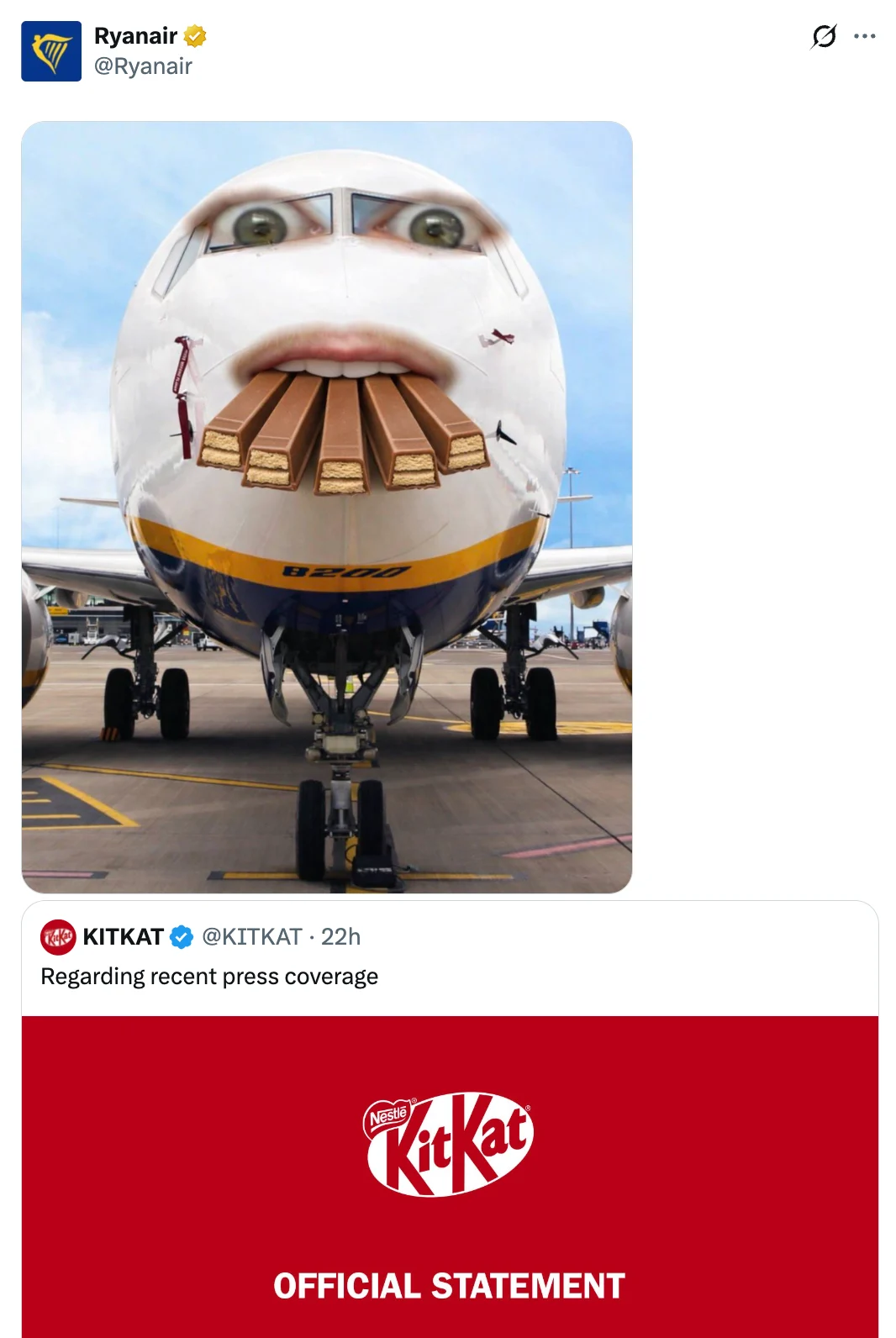
From Ryanair, Kia and Taki’s to McDonalds’ playful twitter digs or 7-eleven teasing of new KitKat collabs, everyone had something to say. Brands weren’t just using the opportunity to hop on a new trend but were taking the chance to embed themselves in the spotlight… and it worked.
Ryanair’s viral ‘KitKat-eating plane’ garnered over 2.3 million views on X and was shared across numerous social media platforms, whilst Dominos UK’s ‘unofficial’ statement jokingly hinting at a new KitKat flavoured pizza amassed over 400 thousand likes on Instagram. A marketing moment for KitKat became an opportunity for a plethora of global brands to self-promote, with these posts now appearing all across the internet.
Was your KitKat stolen?
Following the social frenzy, KitKat continued to ride the wave of hype releasing an interactive tracker, allowing consumers to interact with the brand at a more personal level.
The tracker, labelled as a bid to ‘find the stolen chocolates’ requires the customer to scan the barcode of a Formula One chocolate bar allowing the user to “verify” if their KitKat was one of the many stolen. The tracker has transformed into yet another marketing win with customers rushing to scan their barcodes.
Results from scans are being posted all over social media, with many rushing to buy a chocolate to get involved in the fun. The campaign has created an opportunity to include everyone, and KitKat has been on the digital radar ever since.
A perfectly curated moment
The success of KitKat's marketing response left many questioning whether this was a strategically timed promotion that was aimed at blending both April Fool’s Day and the Easter holidays. Either way, the result proved the brands’ ability to re-frame a logistical accident into a marketing win using online engagement, PR and a humorous digital response.
So what do you think, was this all just a hoax, or the perfect response to an imperfect dilemma?